

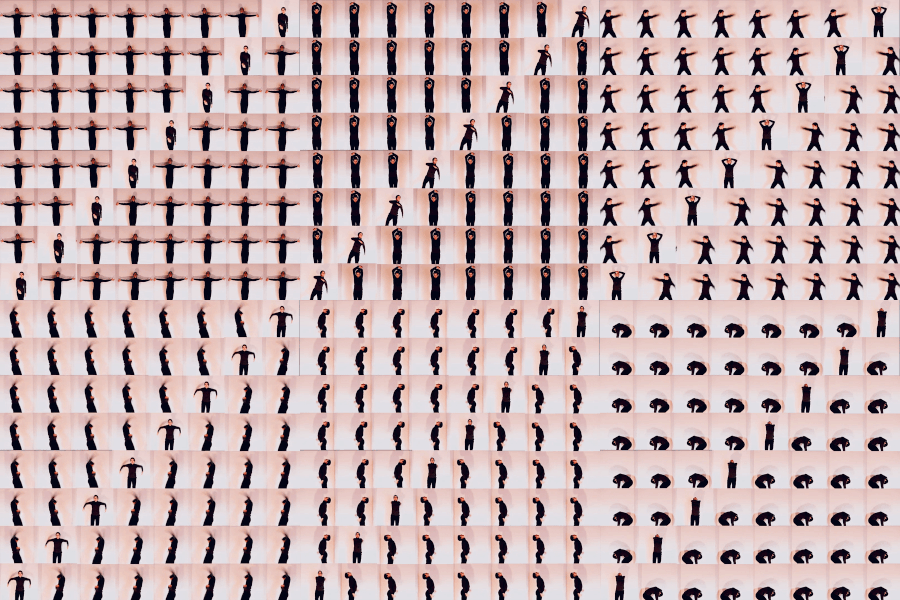
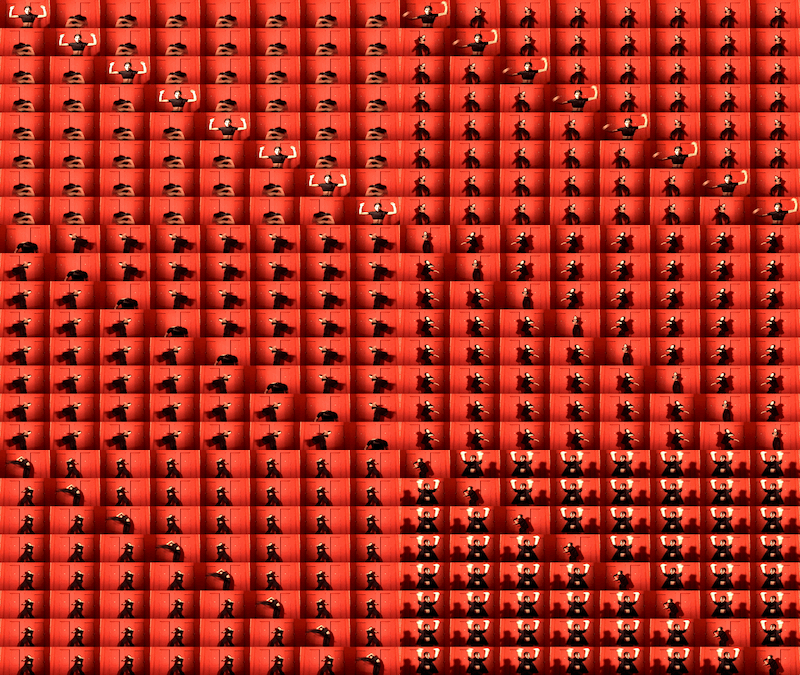
Practices of rehearsal.
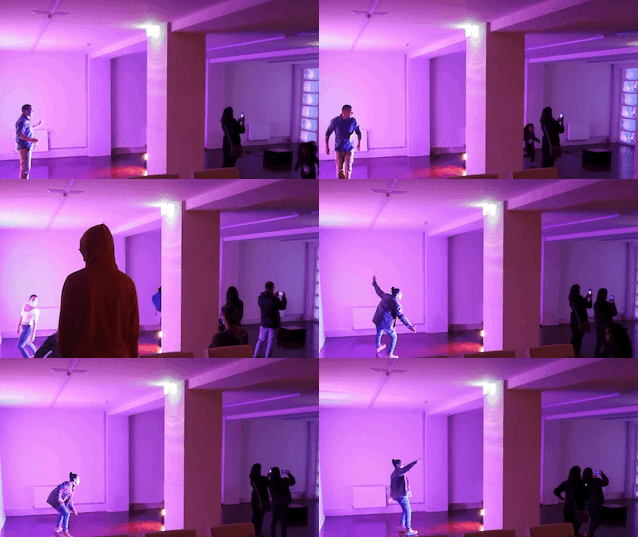
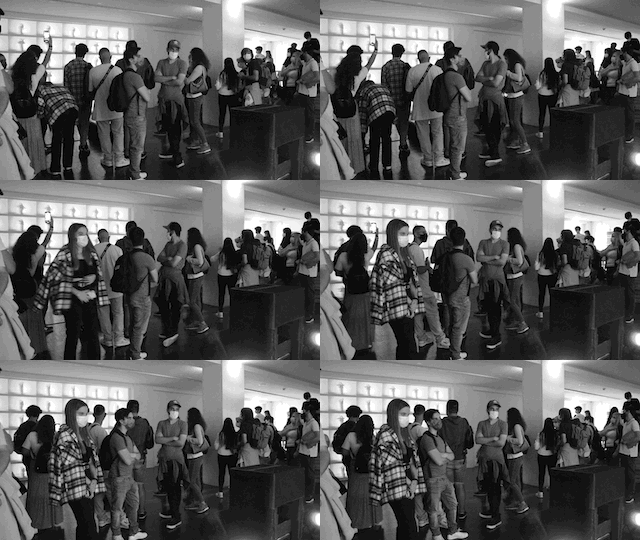
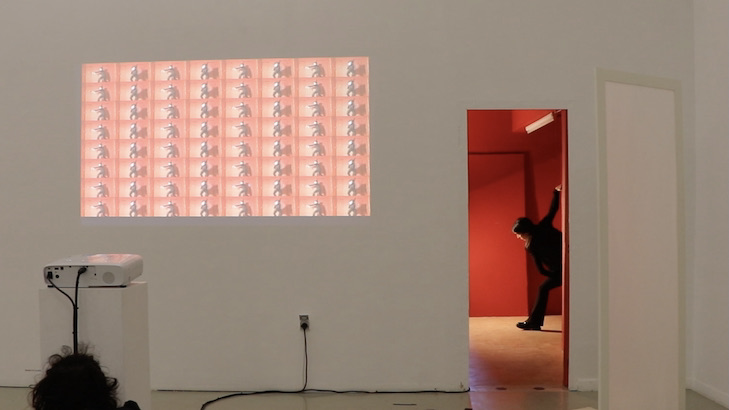
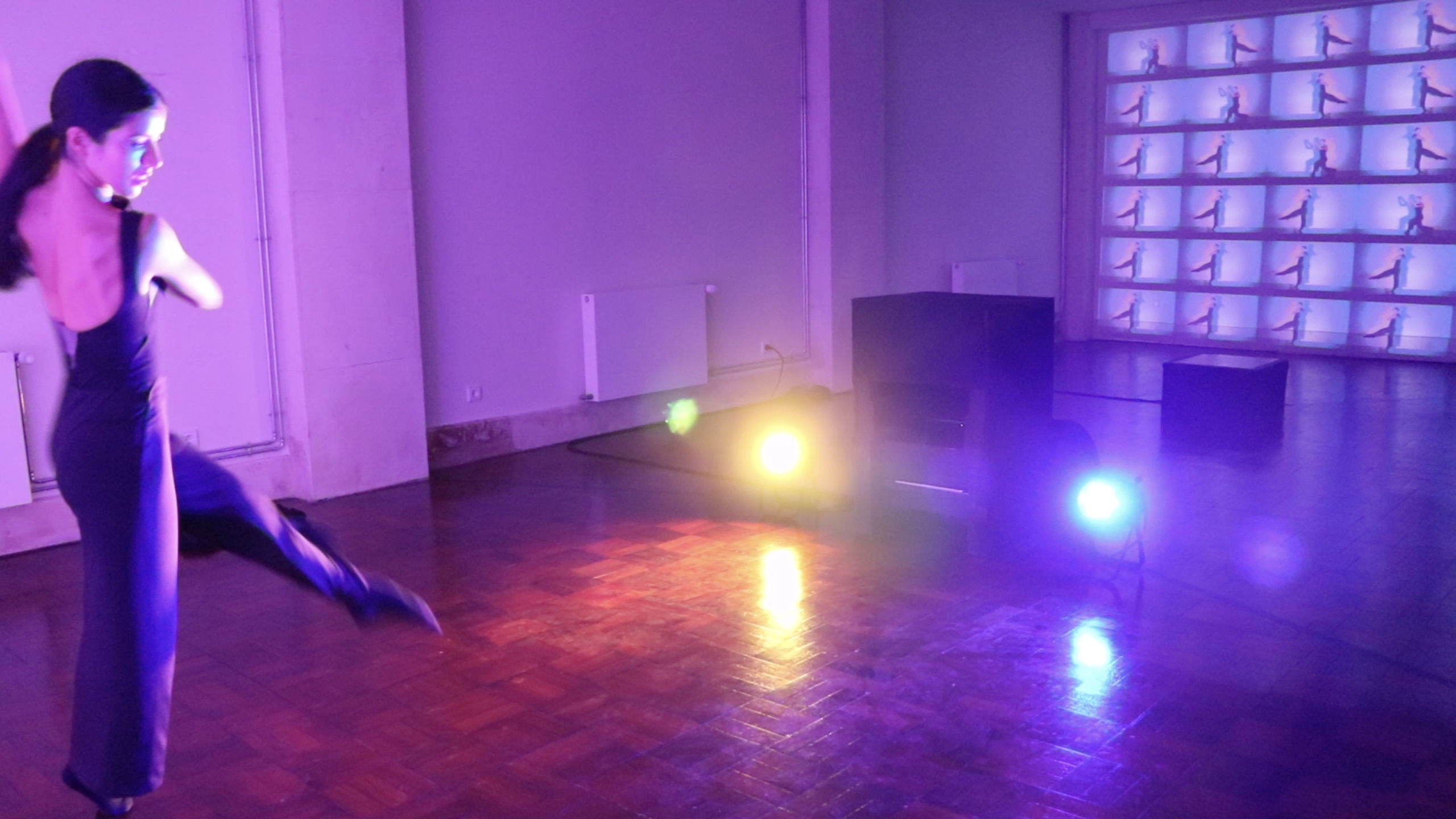
Different moments experienced by the audience.
"Move In Tempo" explores choreography through temporal layering. Past, present, and anticipated gesture are composed within a single visual field, where movement becomes both memory and immediate event.
Conceived as a site-responsive performance-installation, the work adapts to each exhibition context while preserving its temporal premise. It unfolds as a staged encounter between performer, projection, and audience.
Distinct temporal states that do not naturally intersect are brought into relation through computational mediation. The resulting image is not illustrative: it is structural, revealing time as a choreographic material.
By linking dance, technology, and spectatorship, "Move In Tempo" creates a multi-sensory dialogue in which each gesture leaves a trace across layered durations. Performance and installation remain inseparable, each activating the other.
The performer initiates the temporal composition through improvisation, and the audience is subsequently invited into the same responsive field. Body-tracking processes translate motion into a dynamic visual grid where viewers may inhabit their own choreographic relation to time.
Emerging from a period of reconfigured performance conditions, the work reflects on multiplication, absence, and continuity. It proposes temporal expansion as a poetic strategy for reimagining collective presence in dance.